
Some days, I have a certain smile on my face. It’s got some strategic dimples and is accompanied by eyebrows of resignation. I use it in public.

It’s something I do when my son is with me.
Oh, I never mean to pull that face. Apparently I’m just expressive.
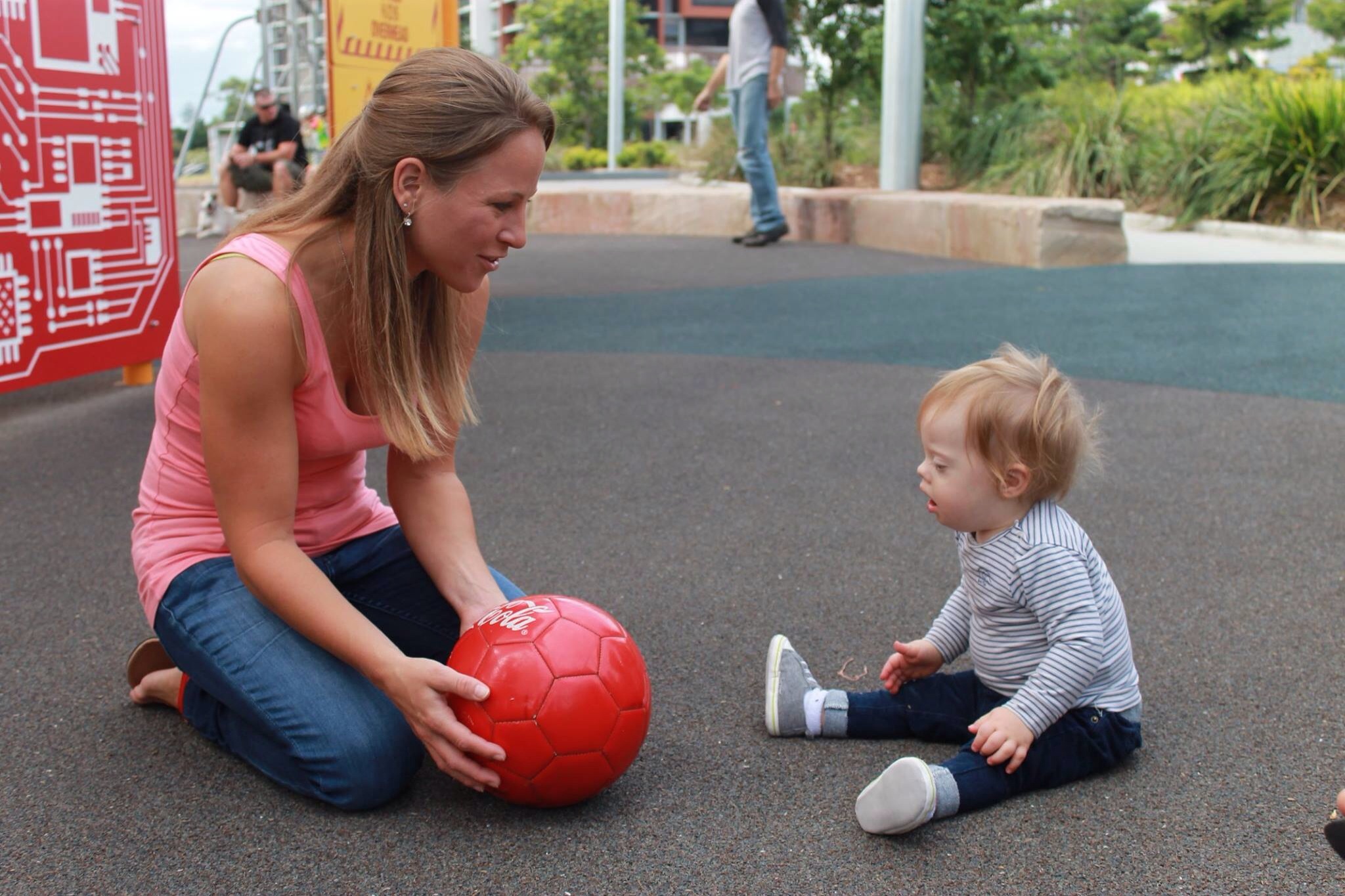
Parker is almost 2. When he struggles out of my arms and stands at my feet, people smile acceptingly of his toddler antics, or ignore him like they do most babies. Then he finds freedom, plants on his bottom, and spins around a couple of times. They start to double take- they’re not sure why he’s different, but their subconscious has registered his lower tone, ease and fluidity of movement uncharacteristic of a clunky heavy toddler.
They notice he isn’t walking yet.
They look at his tiny ears, his precious eyes with epicanthic folds and delicate nose, his advanced skills for his infant size 0 body.
Then it clicks- he has Down syndrome.
Their demeanour changes.
In my entire life, I have never before had so many people try and catch my eye, than in the moment after they realise this fact.
They want to say with their eyes, “Your son is a doll! He is so cute! I didn’t know they are so cute!” Or, my “insert relative/good friend” has Down syndrome!
Not all hold back. A fair chunk of them come out and say it. And it’s lovely, we have a moment, and move on. A few will keep going, and say something sweet, supportive, or in the spirit of parenting comrades.
Then you get the others. They’re not the majority- but they are the hardest type of stranger for me. This type of person just wants to share, and overshare. They will keep me for 20 minutes if I don’t interrupt or break their flow. They want to bond, they are seeking a connection, and it can be overwhelming for me when I’m just not operating in their version of reality.
I feel that smile come over my face. It’s a shield- not blank, but I’m on guard. I can’t take on much of what they’re saying- my brain is elsewhere. At that moment of my life, 80% of the time I don’t want to ‘educate’, or politely correct their disability language, or explain why their expectations are too low/high/limited for the standard I set for my son. I just want to get my bloody groceries. But I don’t want to be rude to someone reaching out to connect to me.
This conflicts with the other part of me, that just wants everyone to ‘know’. I want to yell, “This doesn’t define me! This isn’t all there is to me. This doesn’t define me as a parent or a woman and my pending sainthood is not in the mail, and it doesn’t define my family unit!” I want them to SEE, to understand, with a clarity they aren’t yet privy to.. to know what those in the circled wagons around me do.
That we cannot let words define a person.
But I accept this is new to them, and most importantly- they just want to share THEIR version of reality with me. When I sense they’re not really listening, though, I trot out one of a few elevator pitches I have up my sleeve for different occasions if I sense their disinterest in hearing much else.
I rehash the conversation after I’ve walked away, and try not to be anxious about anything I forgot to say or do to magically empower them with a new level of awareness.
Then until I get to head home, I just smile. I keep it fixed there until I don’t have anyone trying to catch my eye.
But, the next time I heard that phrase that so often goes screaming through my head, it changed everything for me.
I was talking to someone close to me, and we were having a hard conversation about something important that affected them. It was a big deal for them to share with me, and they were not sure what my reaction would be.
I was presented with the information about them, and I didn’t know what to think or how to react. So I developed my preconceived notions about what I was hearing, and I started to put some questions together. Got ready to give my two cents worth, throw in some opinions about friends who have been through similar experiences. Tried to help myself deal with the situation presented to me. To feel more comfortable about discussing it.
Then I heard those magic words.
“This doesn’t define me. It’s not all there is to me.”
I looked in their face, and saw that smile. The ultimate defense mechanism- the exact same smile I plaster on, most days.
And then I shut up, and I listened. I learnt a lot that day.
Sometimes, I can’t fix things by doing all the talking.

 parkermyles.com
This is perfect! So true. Note to self -listen more, talk less.
LikeLike
And I need to keep practising what I preach! Kat
LikeLike
Thank you for taking the time to share this insightful story. Note to self, I must listen more. You write so beautifully. I felt like I was right there. I’m learning so much about children with Downs Syndrome that is truly inspiring that I never thought about before I started reading Parkers Place. Thank you!
LikeLike
Deborah I’m so happy you follow my blog! And even happier it has been a pleasant journey for you. Kat
LikeLike